Feature
New Mazda 6e vs Tesla Model 3
The Tesla Model 3 has long set the standard for electric executive cars, and the Mazda 6e is the latest model to try to beat it at its own game
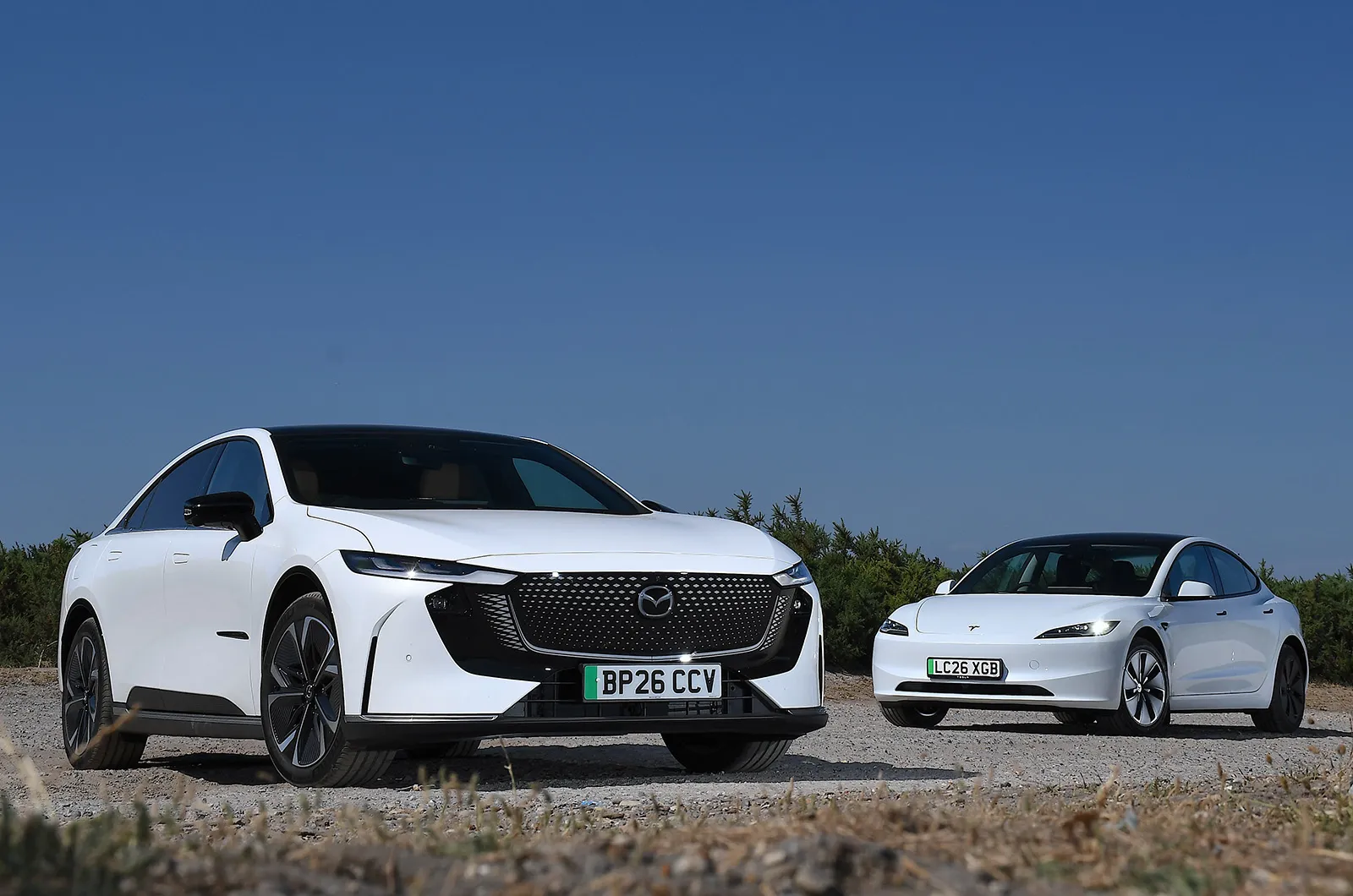
The contenders
NEW Mazda 6e Takumi Plus
List price £39,995
Best price £38,995
Japanese brand Mazda has taken help from China's Changan for its first electric executive car, and it promises a long range, lots of standard kit and a spacious interior.
advertisement
scroll for more
Tesla Model 3 Rear-Wheel Drive
List price £37,990
Best price £37,990
The pace-setting Model 3 is our reigning Executive Car of the Year, even after seven years on sale, and this new entry-level model brings a temptingly low price tag.
Blackberry dismissed the Apple iPhone. Blockbuster refused to buy Netflix. Atari let a deal with Nintendo fall through. So many once-successful companies have suffered because they were stubborn. And perhaps Mazda was worried that it would be next if it kept paying so little attention to electric vehicles (EVs).
Enter the new Mazda 6e. This fully electric revival of the Mazda 6 executive car is the Japanese brand's second-ever EV, after the quirky but half-baked Mazda MX-30, and it'll be followed by the Mazda CX-6e electric SUV later this year.

Oliver Young
Updated: 12 September 2026
Car reviews
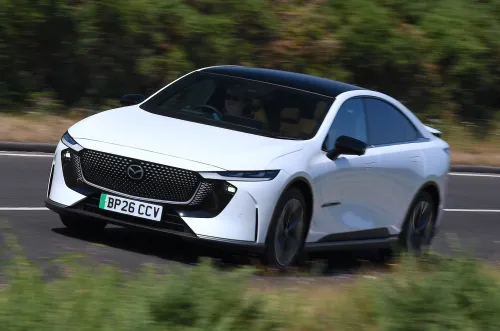
Mazda 6e
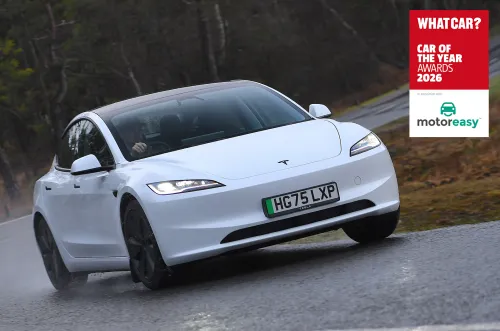
Tesla Model 3
View all new car reviews
Both the 6e and CX-6e have been developed in collaboration with Chinese car maker Changan. Then again, you could argue that Mazda needs all the help it can get, given how tough the competition is. In the 6e's case, it takes on the hugely successful (both critically and commercially) Tesla Model 3.
advertisement
scroll for more
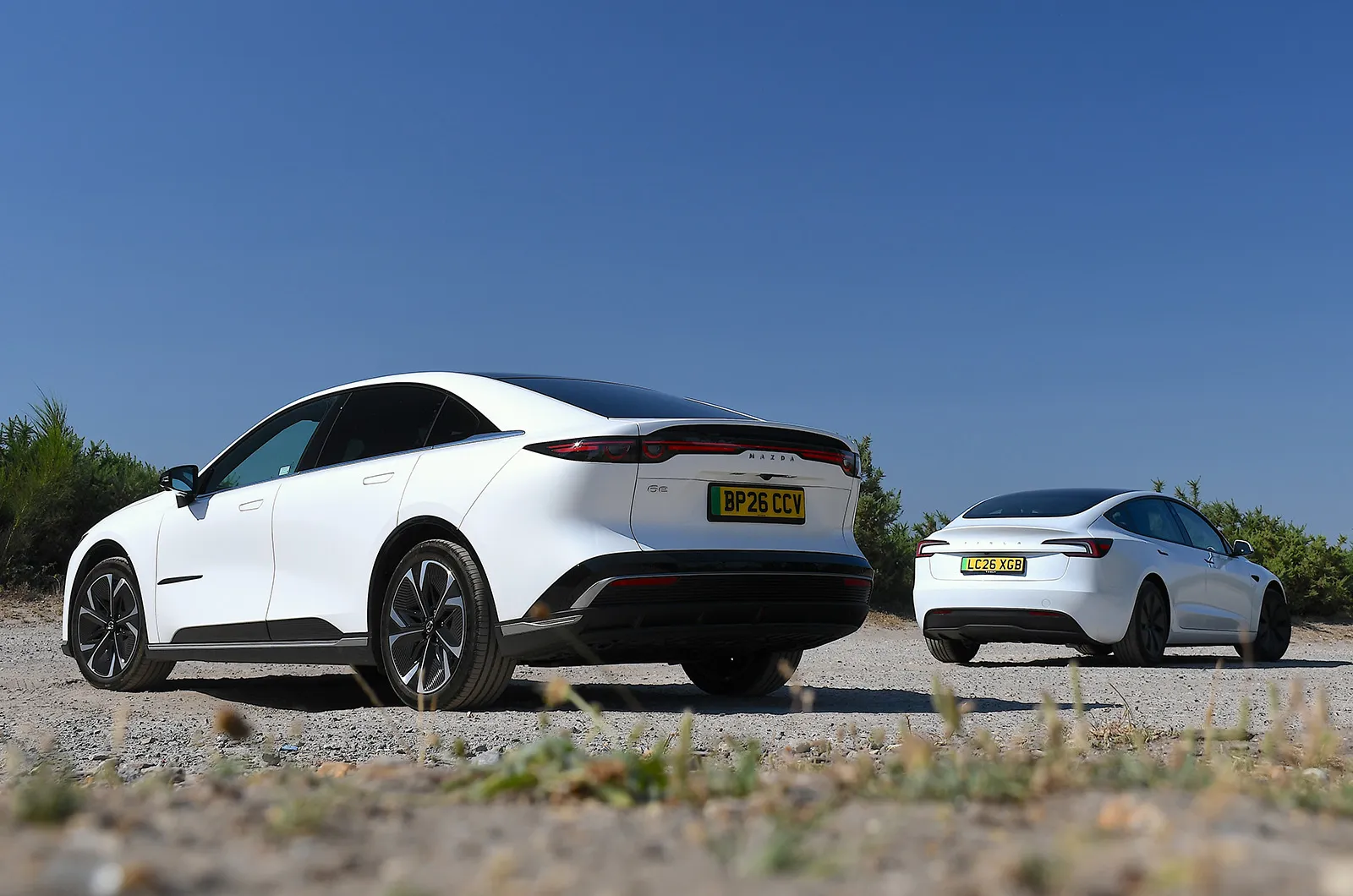
The Model 3 we have lined up is the recently revised entry-level version, named Rear-Wheel Drive (RWD). But while it's the cheapest Model 3 yet, this has been made possible by fitting a less sophisticated suspension set-up, slightly reducing performance and being stingier with the equipment list. So, is this a prime opportunity for the 6e to strike?
Driving
Performance, ride, handling, refinement
Both of our contenders respond smoothly and swiftly when you accelerate hard away from a standstill, as you might when pulling out of a busy junction. However, while the 6e feels sprightly enough in any given scenario, the Model 3 is ultimately the faster of the two; 0-60mph takes 6.3sec, compared with 6.9sec in the 6e.
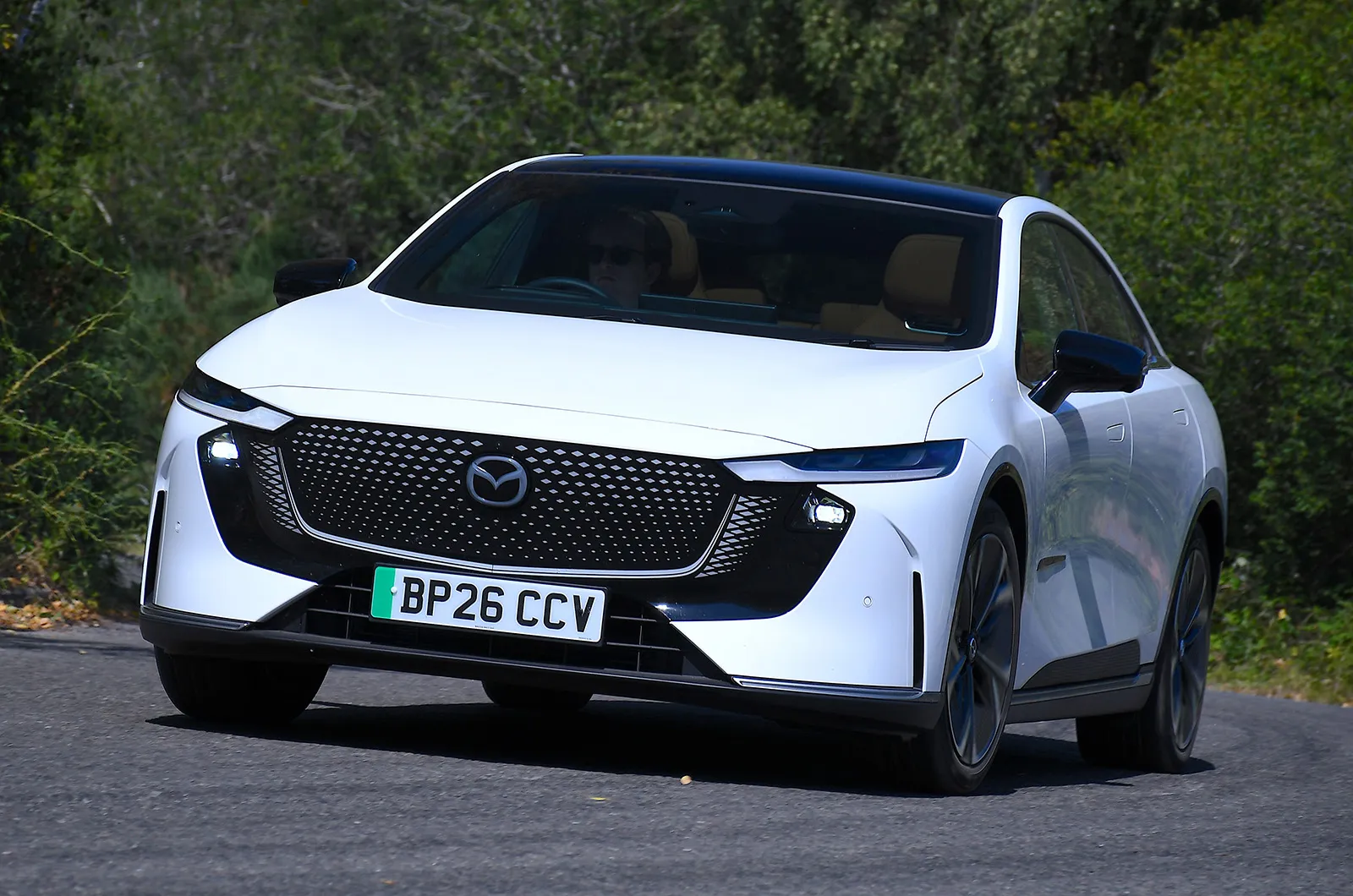
The Model 3 has a bigger advantage when it comes to handling, though, with the 6e's steering being a particular weak spot. Sure, it feels reasonably precise when you're in the middle of a turn, but when you're just trying to drive in a straight line, the car tends to meander in its lane, so you find yourself having to make continual corrections.
advertisement
scroll for more
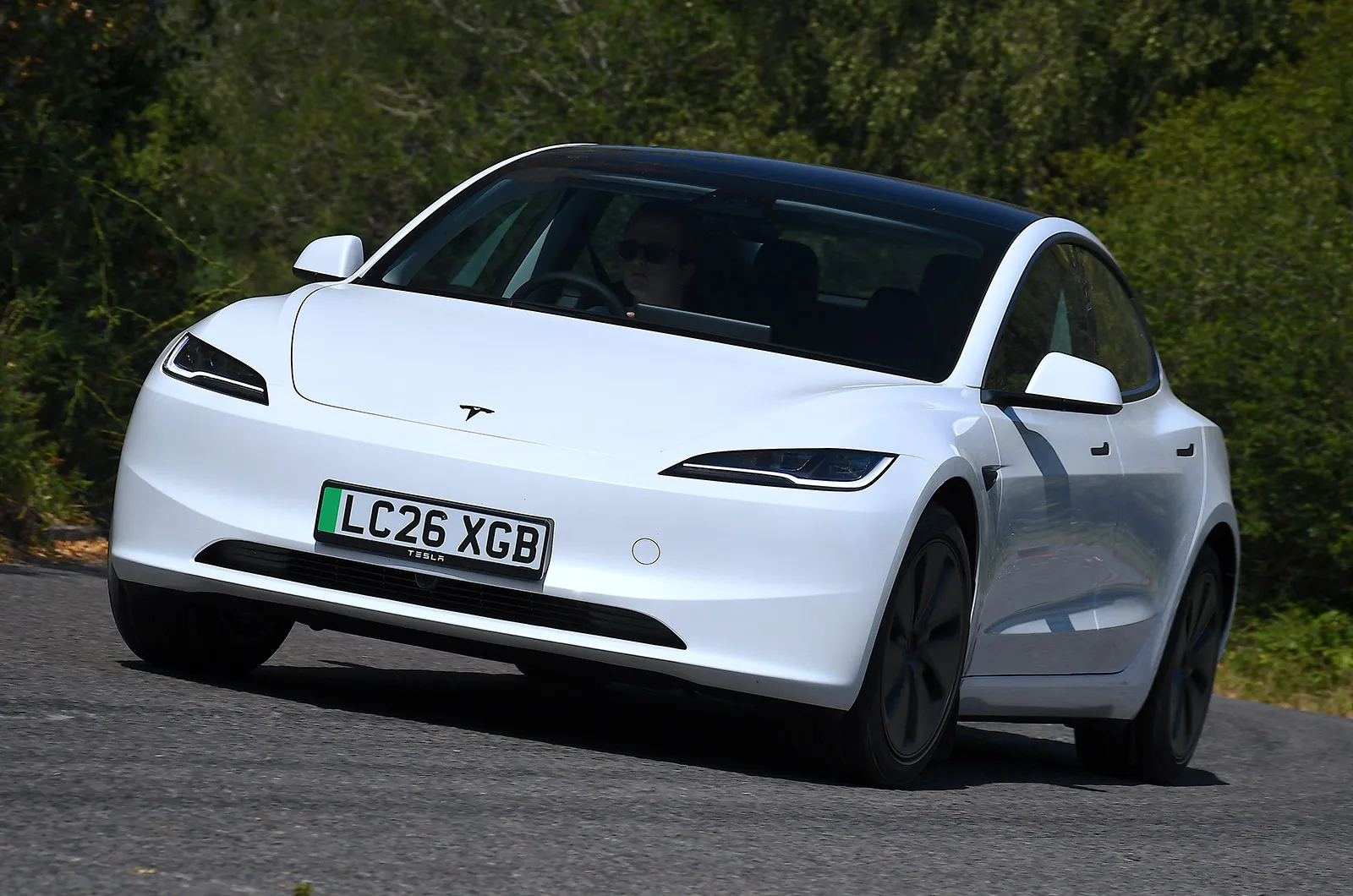
As for the Model 3, its steering is very quick to respond to inputs, so the car feels eager to change direction; some people might say too eager. But it's a paragon of straight-line stability compared with the 6e. Plus, the Model 3's steering is more communicative than the 6e's, making it easier to judge how much grip the front wheels have at their disposal.
As a bonus, the Model 3 doesn't suffer from much body lean in bends, and it continues to feel pretty well planted, even if you hit a big mid-corner bump.
Sadly, the same can't be said of the 6e; it has less grip and leans more, while even small bumps cause the body to move about like you're at the start of a bucking bronco ride. What's more, bucking bronco rides get progressively worse, and so does the 6e's body control if you happen across a series of dips and crests.
That brings us to ride comfort. Neither of these cars is as supple as a Volkswagen ID 7 on optional adaptive suspension – or indeed pricier Model 3s. However, the 6e really struggles with bumpy country roads, pitching you left and right, forwards and backwards. Even this entry-level Model 3 is flatter and more settled; yes, it's firmer, but the extra control makes it the comfier car.
advertisement
scroll for more
The 6e's one saving grace when it comes to ride is that it calms down and finally becomes comfortable on flatter surfaces, but the Model 3 is fine on these, too.
In most Teslas, you can adjust the level of regenerative braking so that more (or less) energy is put back into the battery when you lift off the accelerator, with the side effect that the car slows more dramatically in the higher settings. In the Model 3 RWD, though, there's just one mode that's so strong it can bring the car to a complete stop without you touching the brake pedal at all. This makes life easy around town, but if you don't like it on other types of road, tough luck.
The 6e, by contrast, offers a choice of low, medium and high brake settings, although none of them is strong enough to allow the sort of one-pedal driving that's possible in the Model 3.
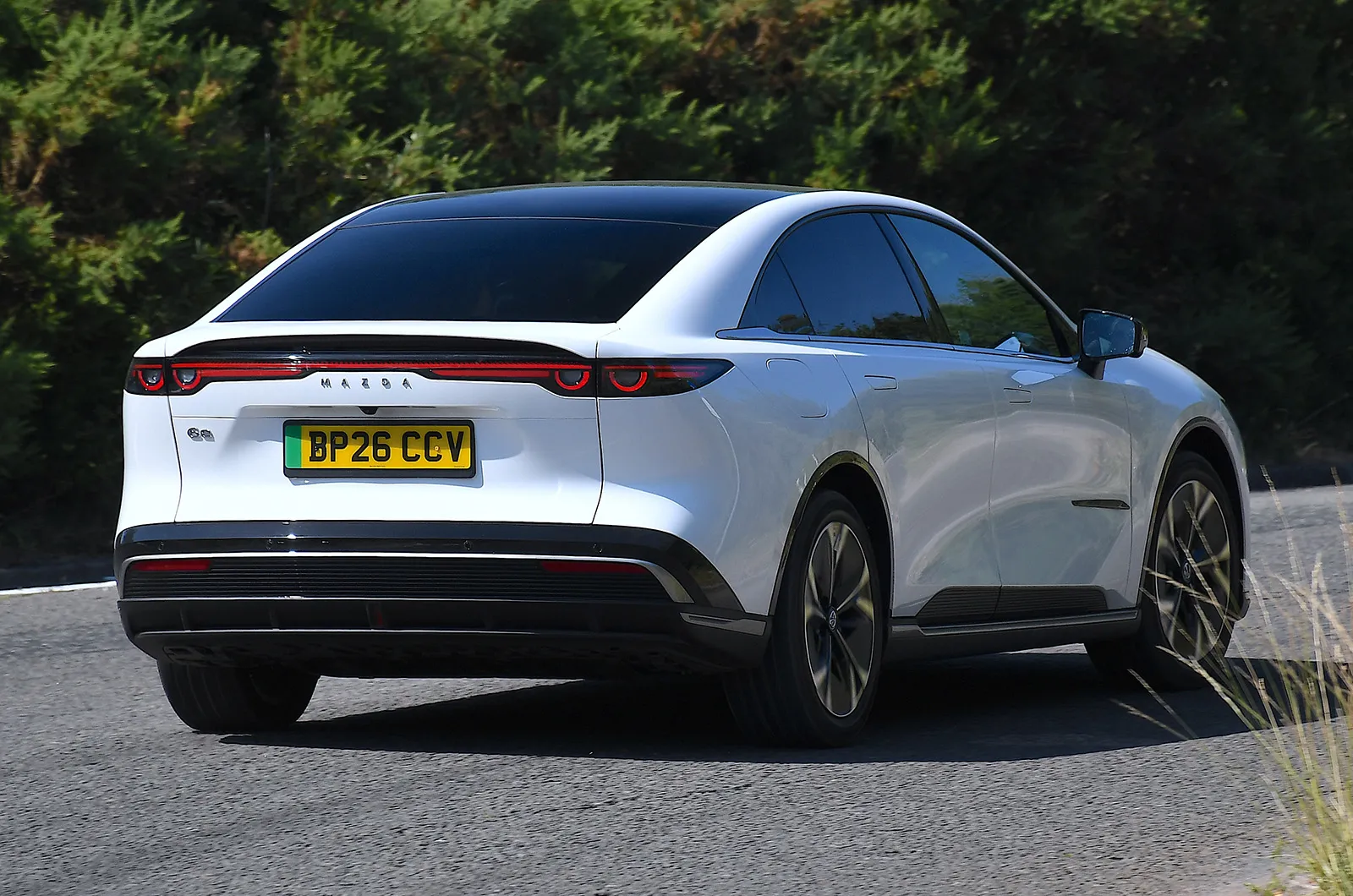
When you do use the physical brake pedal, the Model 3's feels firm and progressive. The 6e's pedal is softer and also less consistent; the regen and physical brakes aren't blended seamlessly. And if you hit a bump while slowing, the antilock braking system (ABS) can cut in unnecessarily. These two things make the 6e feel a bit unpredictable – particularly under medium to hard braking. Mind you, it's actually the 6e that stops within a shorter distance.
advertisement
scroll for more
But speaking of unpredictability, we have a top tip about switching from drive to reverse (or vice versa) in the 6e: double check that it has registered. Be firm and deliberate with the stalk, otherwise there's a good chance that nothing has changed (or the car has shifted into neutral). We don't need to explain the issue with that when you're trying to parallel park, for example.
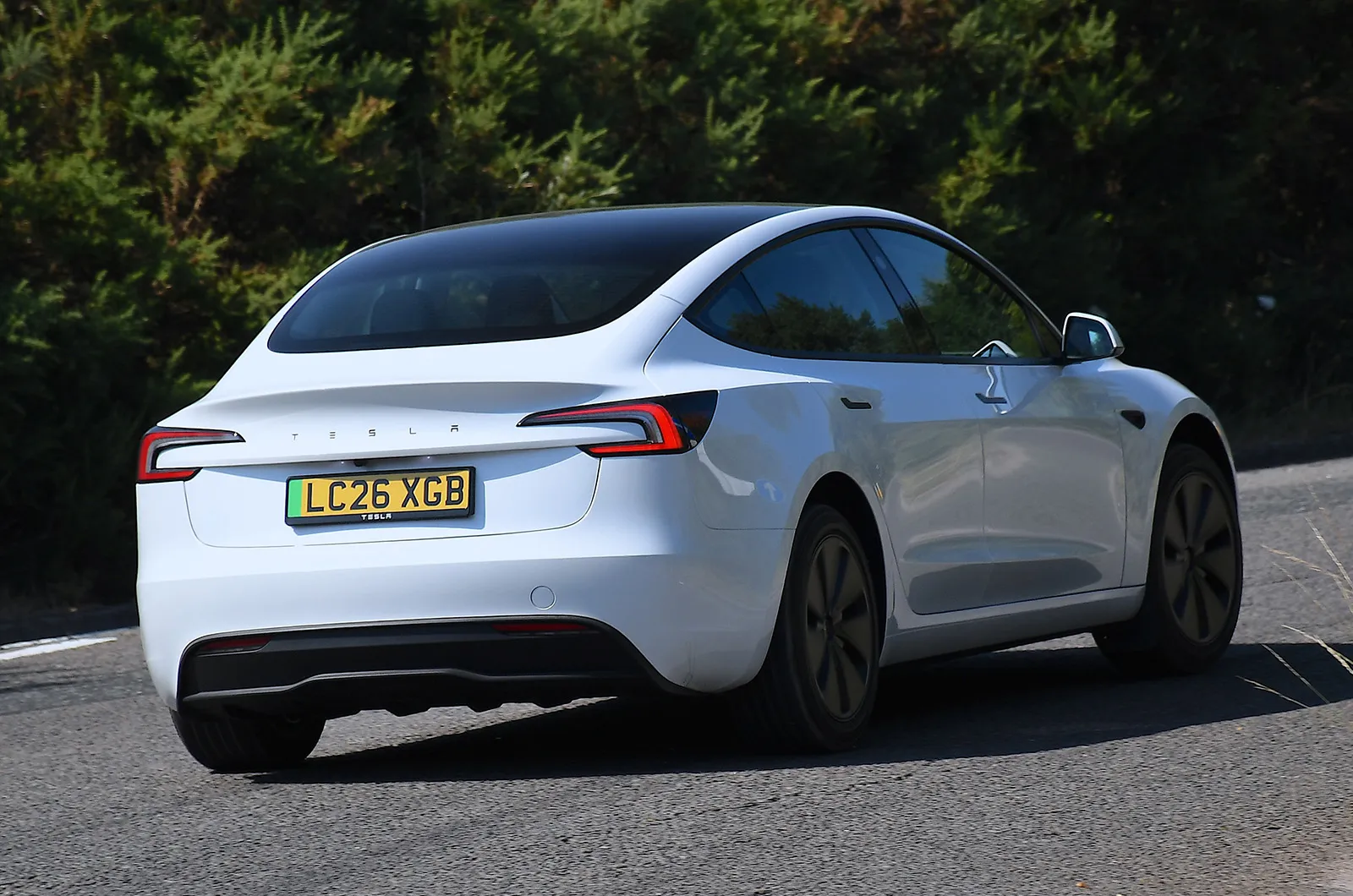
Quietness is an area where the 6e claws back some points, particularly when it comes to road noise, although both cars are pretty hushed right up to motorway speeds.
In addition, the 6e had the longer real-world range in our tests: 312 miles versus 288 miles. This is thanks to its larger battery, which compensated for worse efficiency; 4.06mi/kWh is respectable, but no match for the 4.81mi/kWh the Model 3 achieved.
Behind the wheel
Driving position, visibility, build quality
Executive car buyers often want a low driving position, which can be tricky with EVs because the battery is almost always mounted under the floor (as it is in these two). As a result, the Model 3 doesn't sit you as low as, say, a BMW 3 Series. However, it's actually not far off.
advertisement
scroll for more
In the 6e, the driving position is stranger, because the seat is mounted quite high relative to the dashboard and window line. You almost feel like you're sitting on the car, rather than in it, even if the seat is in its lowest position. In both cars, the steering wheel adjusts up, down, back and forth manually, but all of our testers (ranging from 5ft 11in to 6ft 3in tall) wished the 6e's steering wheel had more reach adjustment.
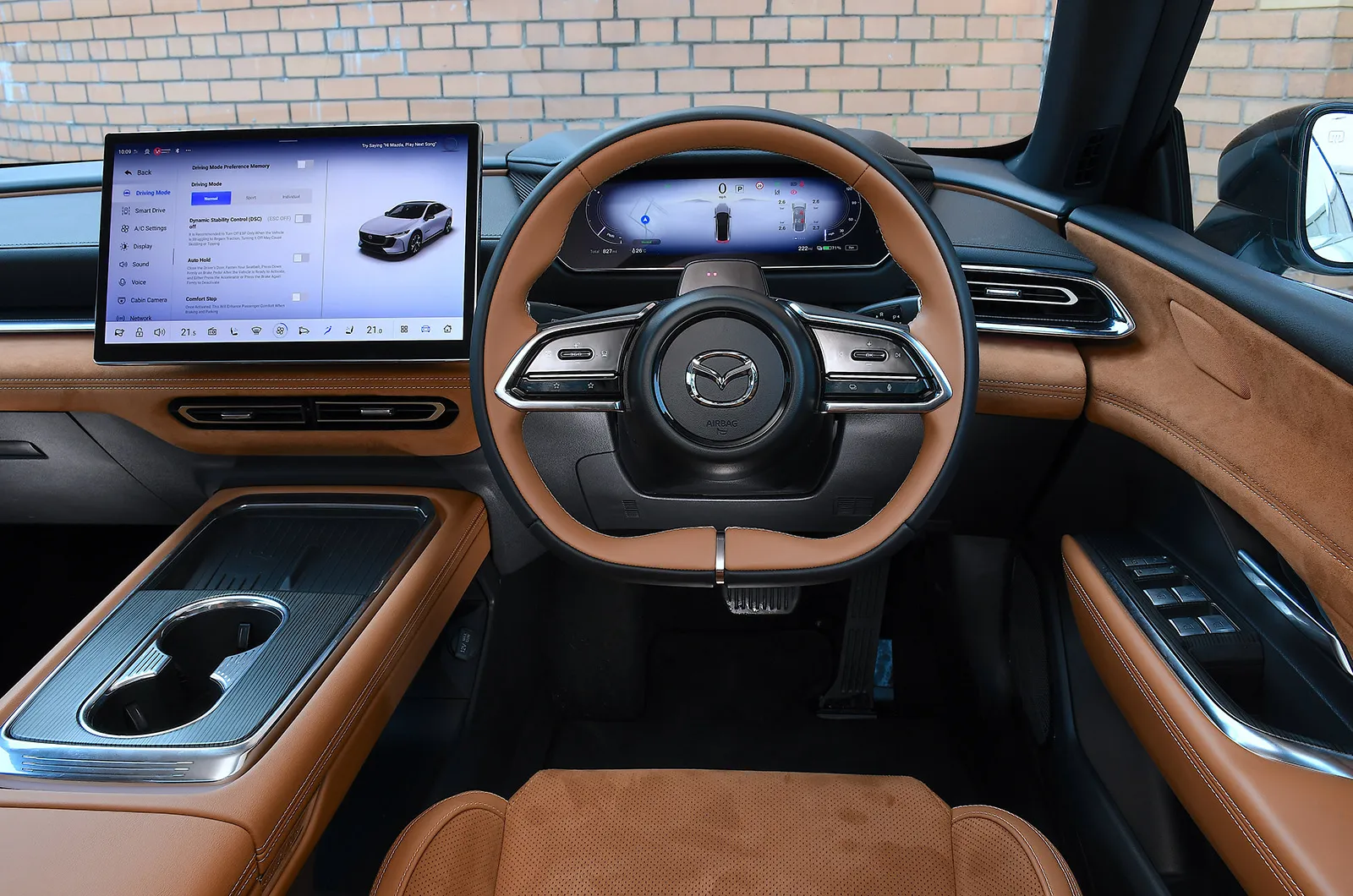
Electrically adjustable front seats are standard in both cars, but there's an unusual catch with the Model 3; the seats can be adjusted only via the central touchscreen. If you've set up a driver profile, the seat will automatically adjust when you hop in the car, but if you want to make a small adjustment on the move, you can't just nudge a button by the seat (like you can in the 6e).
Mirror adjustments require use of the screen in both the Model 3 and the 6e, though, and the same is true of the climate control. When it comes to user-friendliness, then, the 6e represents a sizeable step back compared with Mazdas of old, although you do at least get two customisable shortcut buttons on the steering wheel.
advertisement
scroll for more
Thankfully, the 6e lives up to Mazda's strong reputation for classy interiors. Our test car was in range-topping Takumi Plus trim, and this gives you lots of suede and tan leather. It looks properly premium and most of it feels plush to the touch. The reason we say 'most' is because there are some scratchier plastics lower down, as well as some disappointing aspects; the metal-effect air vents, for instance, feel cheaper than they look, and, more concerningly, we found the steering column had some minor play in it.
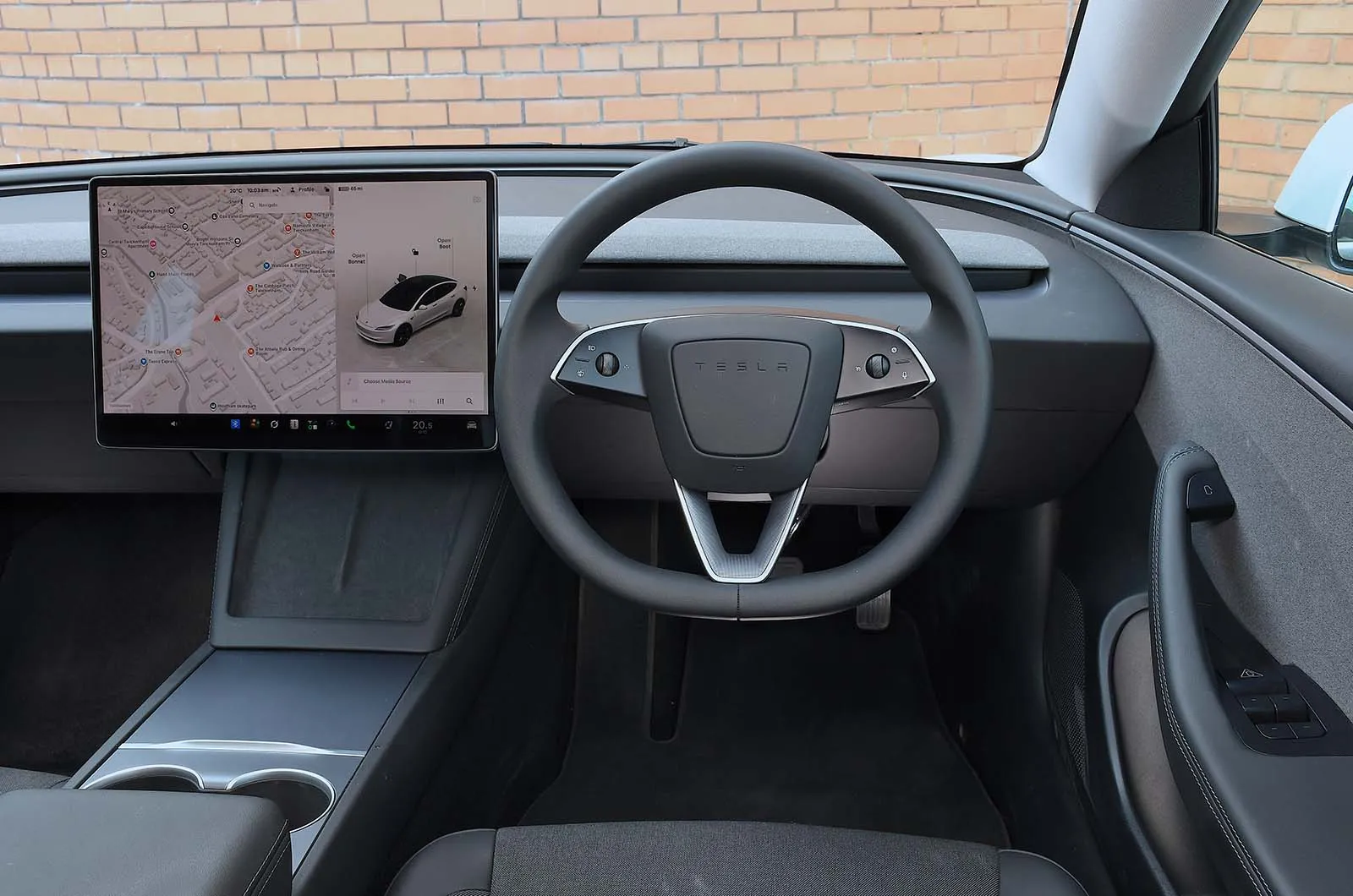
The Model 3's interior generally feels good, too. There are lots of soft-touch materials and everything feels well screwed together. However, in certain places where Mazda has used suede, Tesla has used a less distinguished fabric, so the Model 3 doesn't feel quite as premium.
Forward visibility in the Model 3 is mixed; the windscreen is big, but its thick, steeply raked pillars can get in the way at junctions. The 6e has slimmer pillars, but taller drivers might find that the low-hanging rear-view mirror blocks some of their view out.
advertisement
scroll for more
On the other hand, while it's easy enough to see out of the back of the Model 3, it's trickier in the 6e. The rear window is quite slim, and the view out gets even tighter if you have the rear spoiler raised. Thankfully, to help with parking, both of our contenders have surround-view cameras, as well as sensors front and rear.
Infotainment systems
Mazda 6e
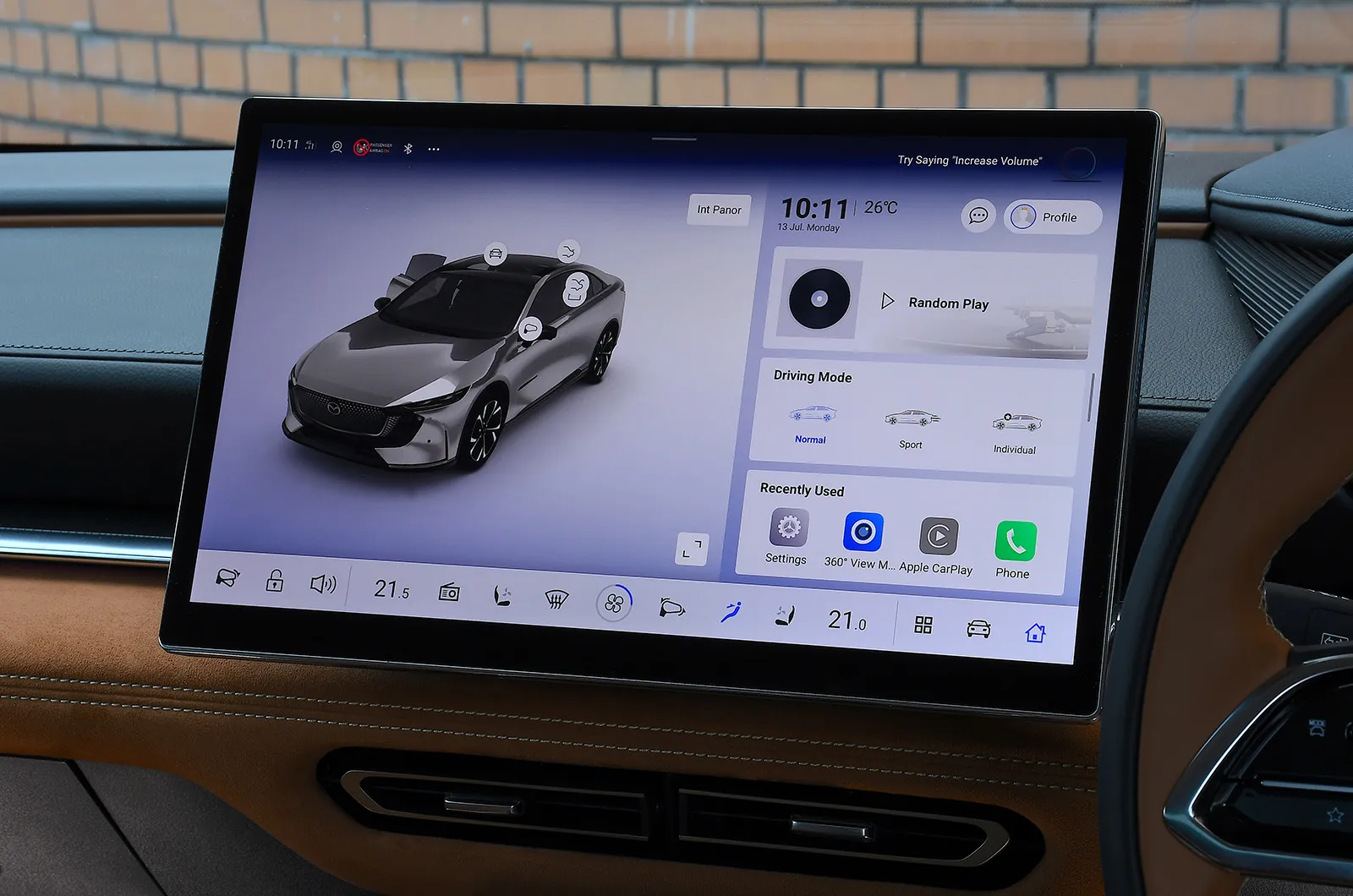
The 6e's 14.6in touchscreen responds pretty quickly to inputs, even if certain icons require laser precision to prod accurately; selecting the temperature, for instance, is fiddly. The graphics are crisp and the customisable shortcut bar is useful, because you can permanently display frequently used functions. However, it's still all too easy to get lost in the menus, because they're not very logically laid out. Also, because the screen is tilted forwards at the top, it suffers from glare on sunny days.
Tesla Model 3
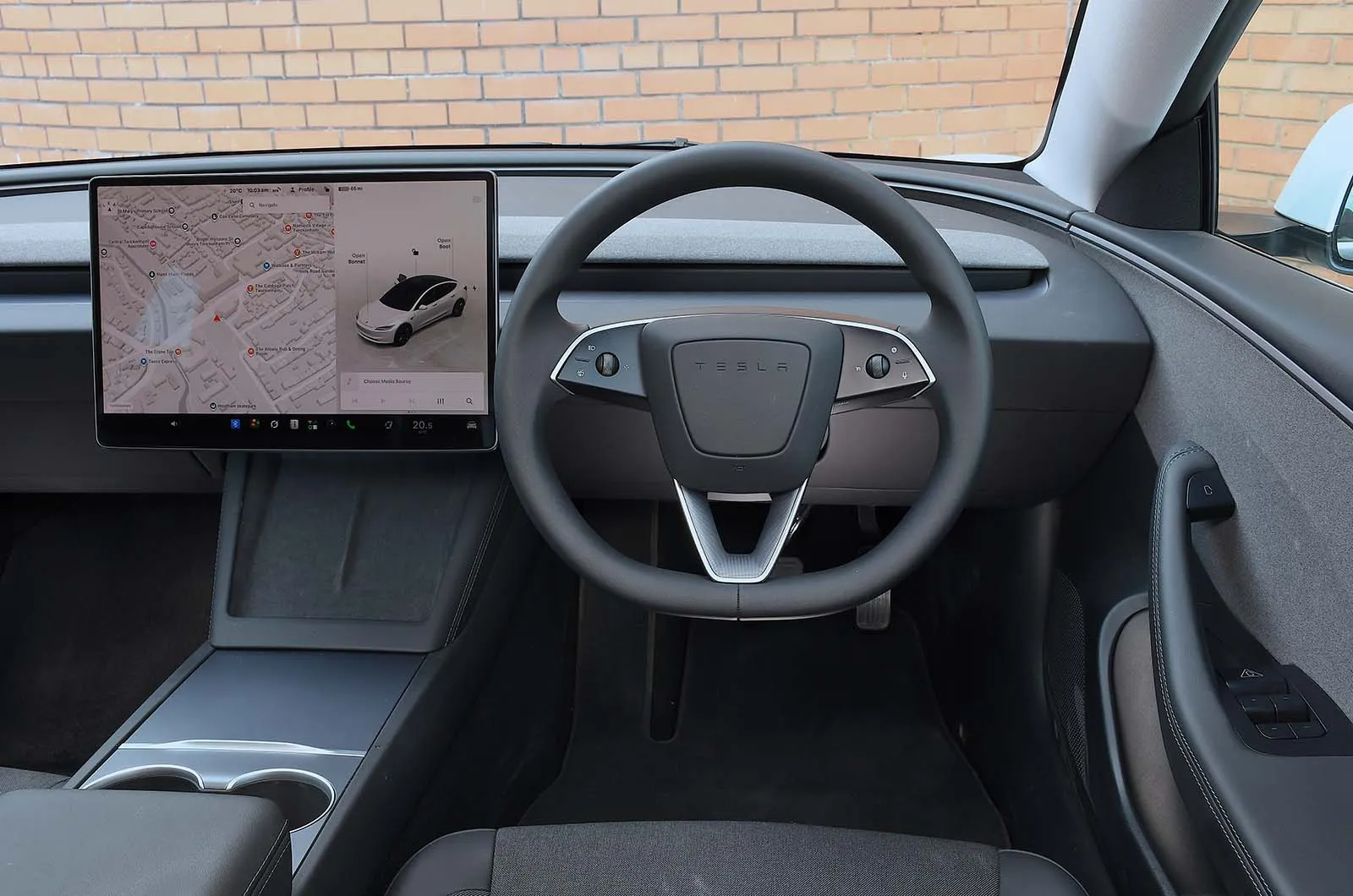
If you thought the 6e had a big screen, get a load of this: the Model 3 has a 15.4in touchscreen. It can be quite overwhelming at first, but you soon learn that it hosts the superior infotainment system. The graphics are even sharper, plus it's super-responsive and more intuitive to use. There are lots of features, including Netflix and Spotify. Unlike the 6e, though, there's no Android Auto and Apple CarPlay smartphone mirroring, and the seven-speaker sound system isn't as clear as the 6e's 14-speaker Sony set-up.
advertisement
scroll for more
Space and practicality
Front space, rear space, seating flexibility, boot
The Model 3 has more space in the front and generally feels airier; long-legged drivers might wish the 6e's driver's seat slid farther back.
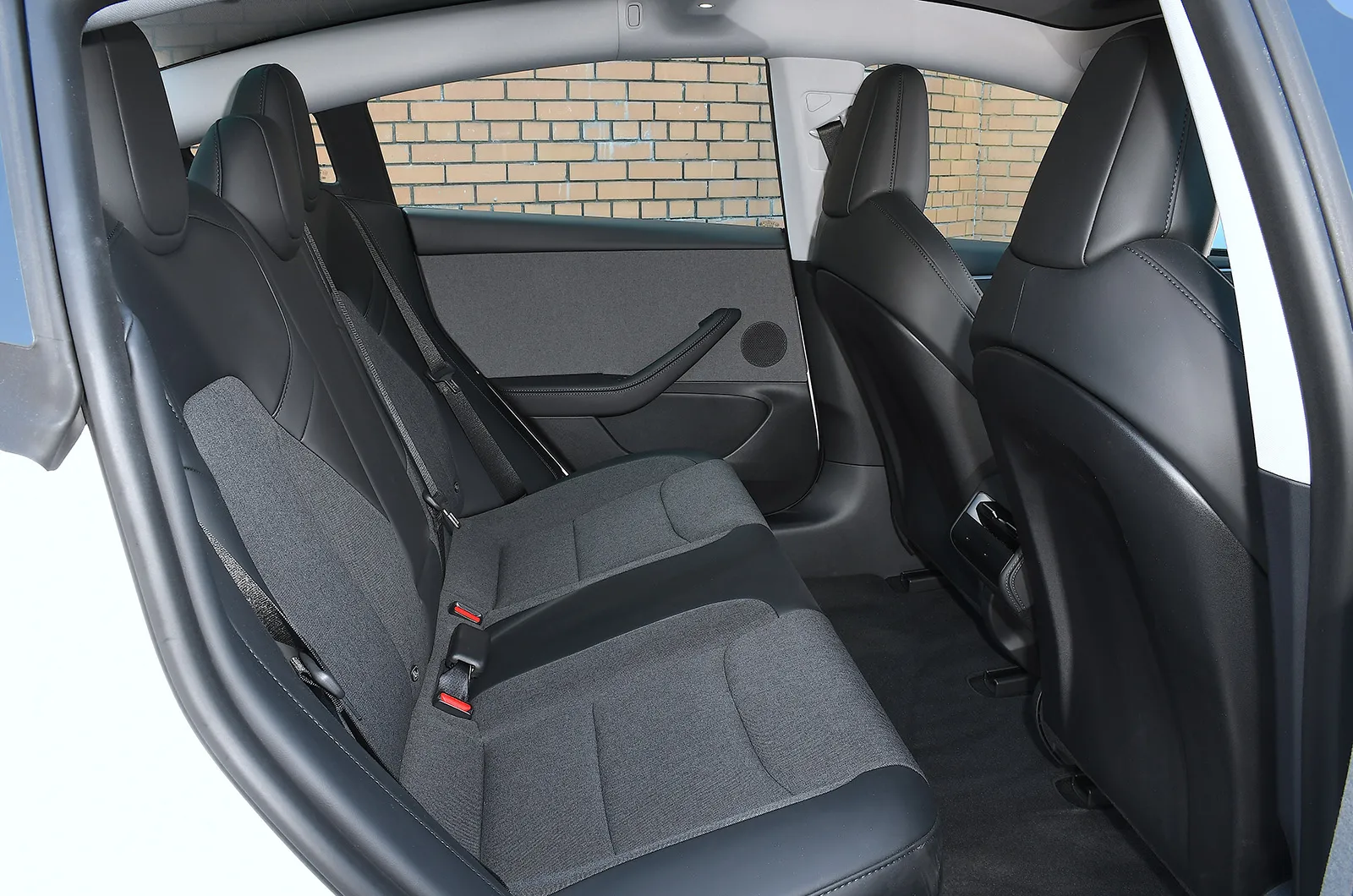
Move into the back and the situation is reversed; the 6e is better, particularly for knee room. Our 6ft 3in tester could still fit in the Model 3, but only just. There's more shoulder room in the 6e for three sitting side by side, but a middle passenger won't enjoy as much head room as in the Model 3. Both cars have a completely flat floor, so that passenger won't have to sit with their legs splayed either side of a hump.
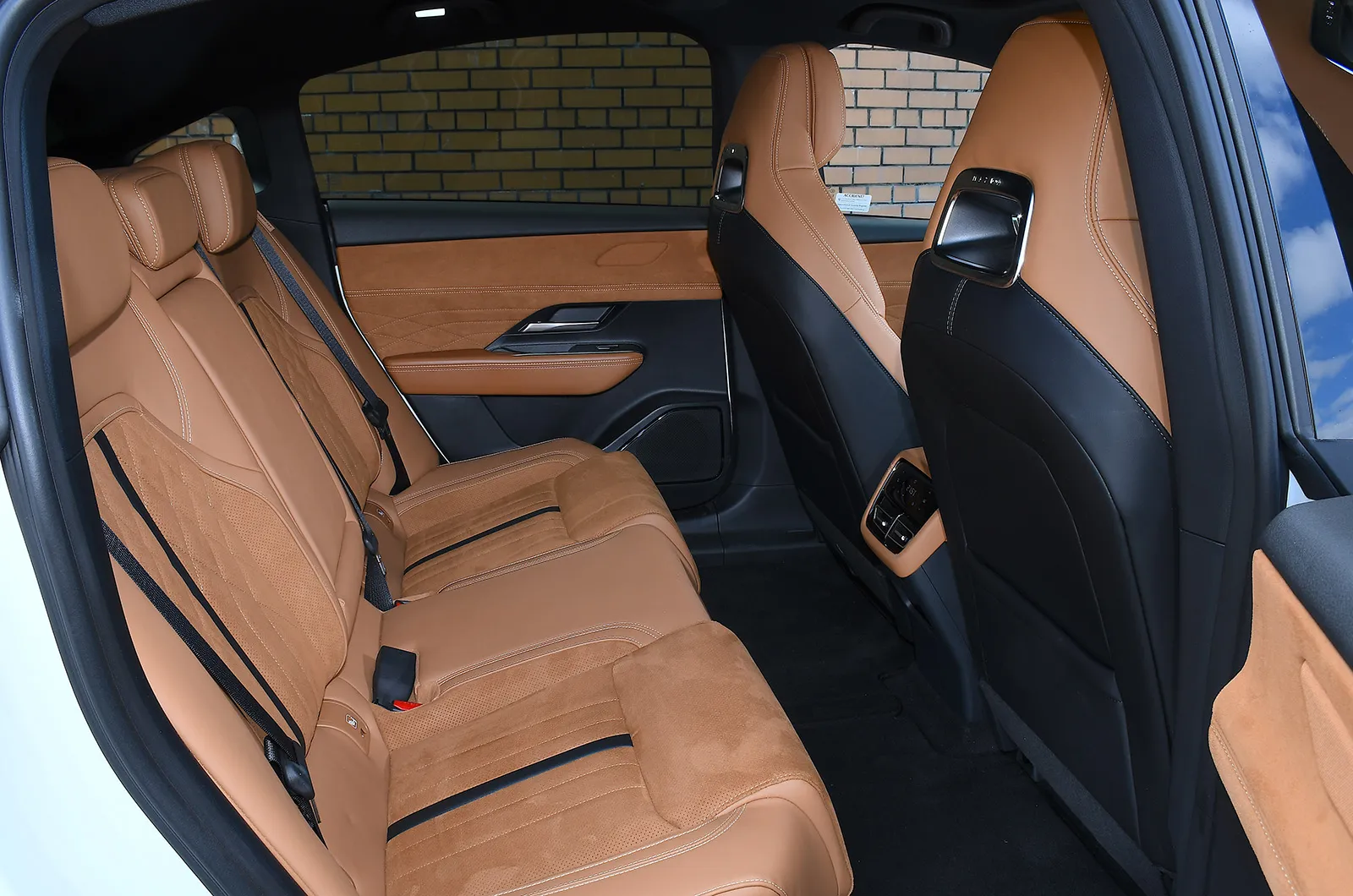
In order to accommodate the batteries underneath, the floor of each car is raised; this affects the seating position by pushing up the knees of rear passengers and robbing them of under-thigh support. This problem is worse in the 6e, though, partly because you can't tuck your feet as far under the seat in front.
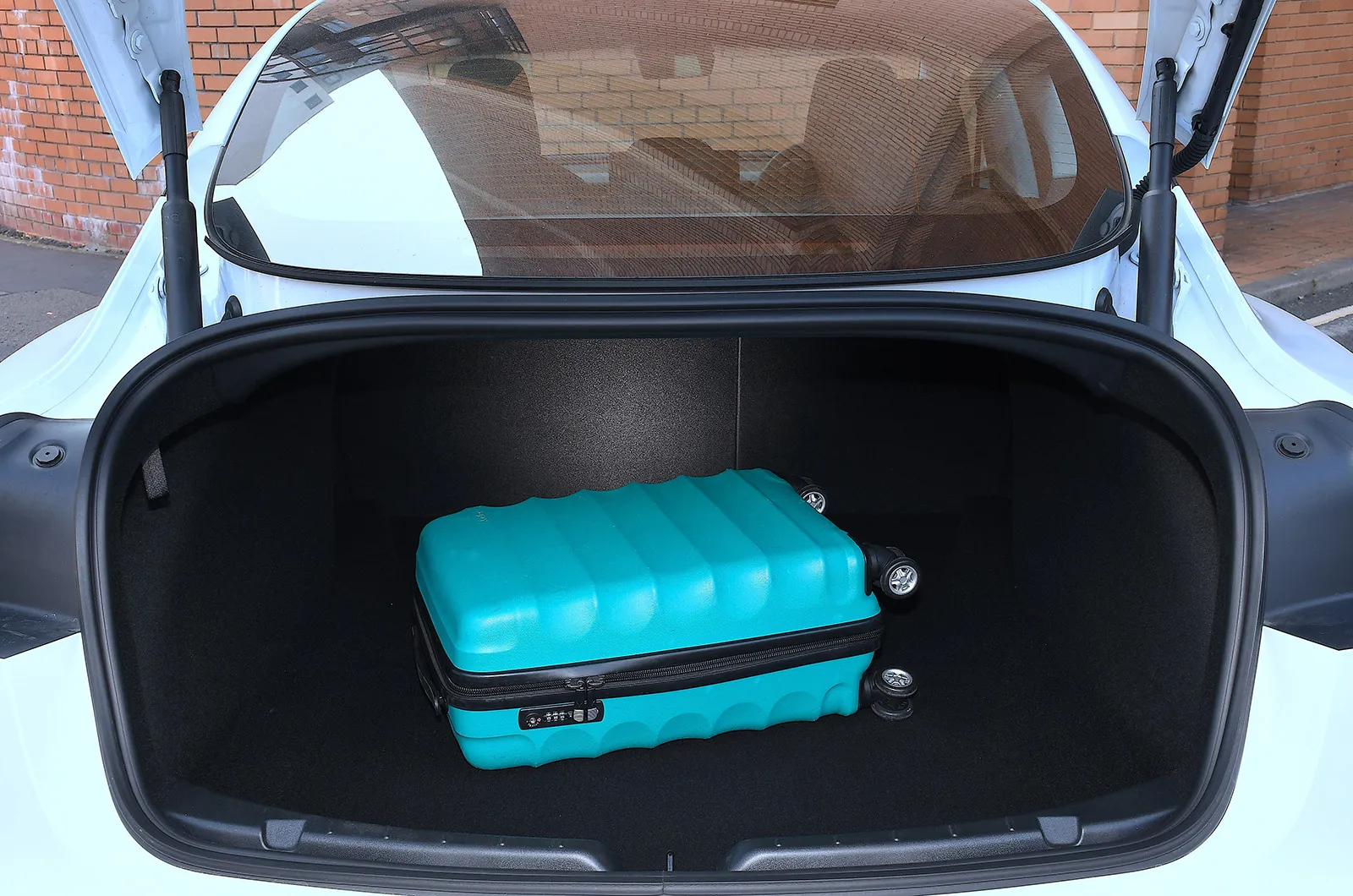
If you've seen the official capacities before looking in the boots, you'd think the Model 3 has the 6e beaten by a mile when it comes to luggage space, but this isn't the case. Yes, the Model 3 has the larger main boot, but its 128-litre advantage amounts to only one extra carry-on suitcase. And despite the 6e supposedly having the smaller front boot, it can hold two carry-on suitcases to the Model 3's one.
advertisement
scroll for more
In terms of flexibility, it helps that the 6e is a hatchback – not a saloon like the Model 3 – because this means you can remove the parcel shelf and fit in even more luggage. However, both cars have 60/40 split-folding rear seatbacks.
Boot space
Mazda 6e
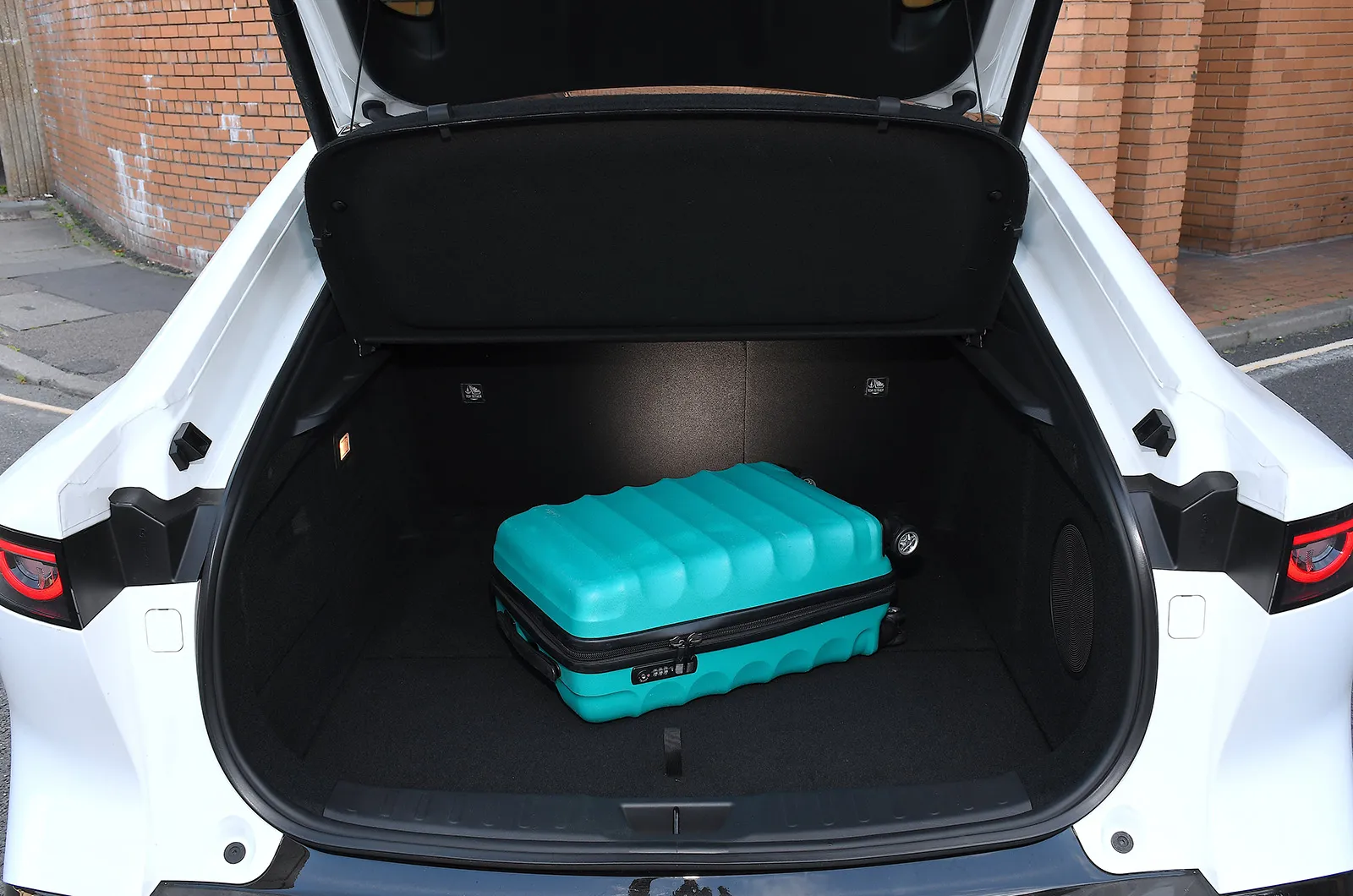
Boot capacity 466 litres (r), 72 litres (f) Suitcases 7 (r), 2 (f)
Tesla Model 3
Boot capacity 466 litres (r), 72 litres (f) Suitcases 7 (r), 2 (f)
Buying and owning
Costs, equipment, reliability, safety and security
The Model 3 RWD has a very tempting list price - one that undercuts even the entry-level 6e trim (called Takumi). But as we mentioned, our test car was a Takumi Plus, which brings the tan leather interior and an electric shade for the sunroof. This grows the price gap to around £2000 – falling to £1005 after discounts.
On PCP finance, the gap is much wider. Take out a 48-month contract with a £3500 deposit and a 10,000-mile annual mileage limit and you'll pay £369 per month for the Model 3, versus £520 for the 6e. Even dropping down to Takumi trim only reduces that to £500 per month; at the time of writing, the Model 3 was available with 0% interest and a £2500 deposit contribution, compared with 2.9% and zilch towards your deposit with the 6e.
advertisement
scroll for more
The 6e will also cost you more in insurance, servicing and electricity, and it's predicted to suffer heavier depreciation.
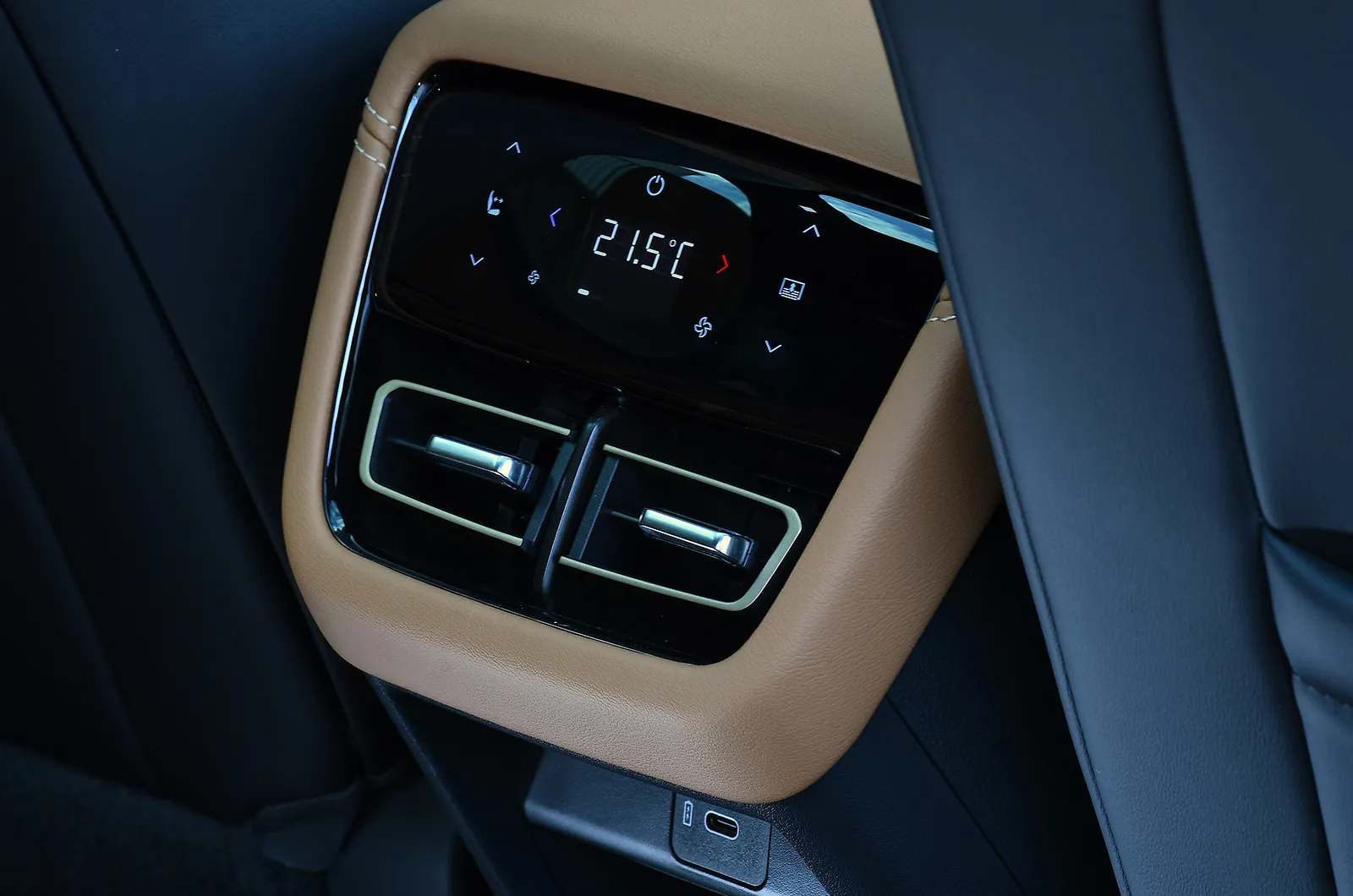
On the other hand, the 6e comes with more equipment than the Model 3, including cooling for the front seats, rear privacy glass, ambient interior lighting and three-zone climate control. At least the Model 3 still has dual-zone climate control, heated front seats and a heated steering wheel.
The 6e charges faster; its 195kW maximum charging rate trumps the Model 3's 170kW figure. But because of its larger battery, the 6e actually takes longer to go from 10-80%. The difference is only a minute when rapid charging, but the gap is wider when charging at home. And don't forget, the Model 3 has full (rather than partial) access to Tesla's widespread Supercharger network and at preferential rates.
Given that it's an all-new car, the 6e didn't feature in the most recent What Car? Reliability Survey, but Mazda came 15th out of the 30 brands included. As for the Model 3, it finished in the top half of the electric car class, and Tesla was seventh in the brand league table.
advertisement
scroll for more
Both cars were awarded five stars for safety when they were tested by Euro NCAP – albeit six years apart, making direct comparisons impossible.
Our verdict
The Mazda 6e is a lesson in why it can be dangerous to judge a book by its cover. You see, it makes a good first impression, with its classy interior, extensive standard equipment list and competitive range. However, you don't have to spend long with it to become aware of big flaws - some of the most significant of which relate to the driving experience. The 6e loses all semblance of composure on uneven country roads. Meanwhile, the only time it becomes comfortable for passengers is when the surface is supersmooth. As a result, the Model 3 - with its secure handling and controlled ride - is a much nicer car to travel in. No, this isn't the best version of the Model 3, but it's still a much better all-rounder than its rival in this test. And yet it will cost you less to buy and be significantly cheaper to run, thanks to lower PCP finance costs, superior efficiency, lower charging bills and stronger resale values.
advertisement
scroll for more
For all the latest reviews, advice and new car deals, sign up to the What Car? newsletter here
1st – Tesla Model 3
For Quicker; sharper handling; more composed ride; better efficiency; cheaper to buy and run; can make full use of Tesla's Supercharger network; more intuitive infotainment
Against Slightly noisier at motorway speeds; wide windscreen pillars hinder visibility; shorter range on a full charge
Recommended options None
What Car? rating 4 stars out of 5
Tesla Model 3 review >>
Tesla Model 3 deals >>
2nd – Mazda 6e
For Plusher interior; more rear seat space; deeper underbonnet storage compartment; more generously equipped
Against Poor body control and straight-line stability; inconsistent brakes; odd driving position; limited under-thigh support in the back; comparatively expensive on a PCP
Recommended options None
What Car? rating 2 stars out of 5
Mazda 6e review >>
Mazda 6e deals >>
Mazda 6e Takumi Plus
Engine Electric motor
Peak power 255bhp
Peak torque 214lb ft
Gearbox 1spd automatic
0-60mph 6.9sec
Top speed 109mph
Braking 30-0mph 8.2m
Braking 70-0mph 44.7m
Noise at 30mph 53.1dB
Noise at 70mph 64.3dB
Kerb weight 2015kg
Tyre size (standard) 245/45 R19
advertisement
scroll for more
Tesla Model 3 Rear-Wheel Drive
Engine Electric motor
Peak power 279bhp
Peak torque 310lb ft
Gearbox 1spd automatic
0-60mph 6.3sec
Top speed 110mph
Braking 30-0mph 8.7m
Braking 70-0mph 47.6m
Noise at 30mph 53.1dB
Noise at 70mph 66.3dB
Kerb weight 1760kg
Tyre size (standard) 235/45 R19
Cars pictured
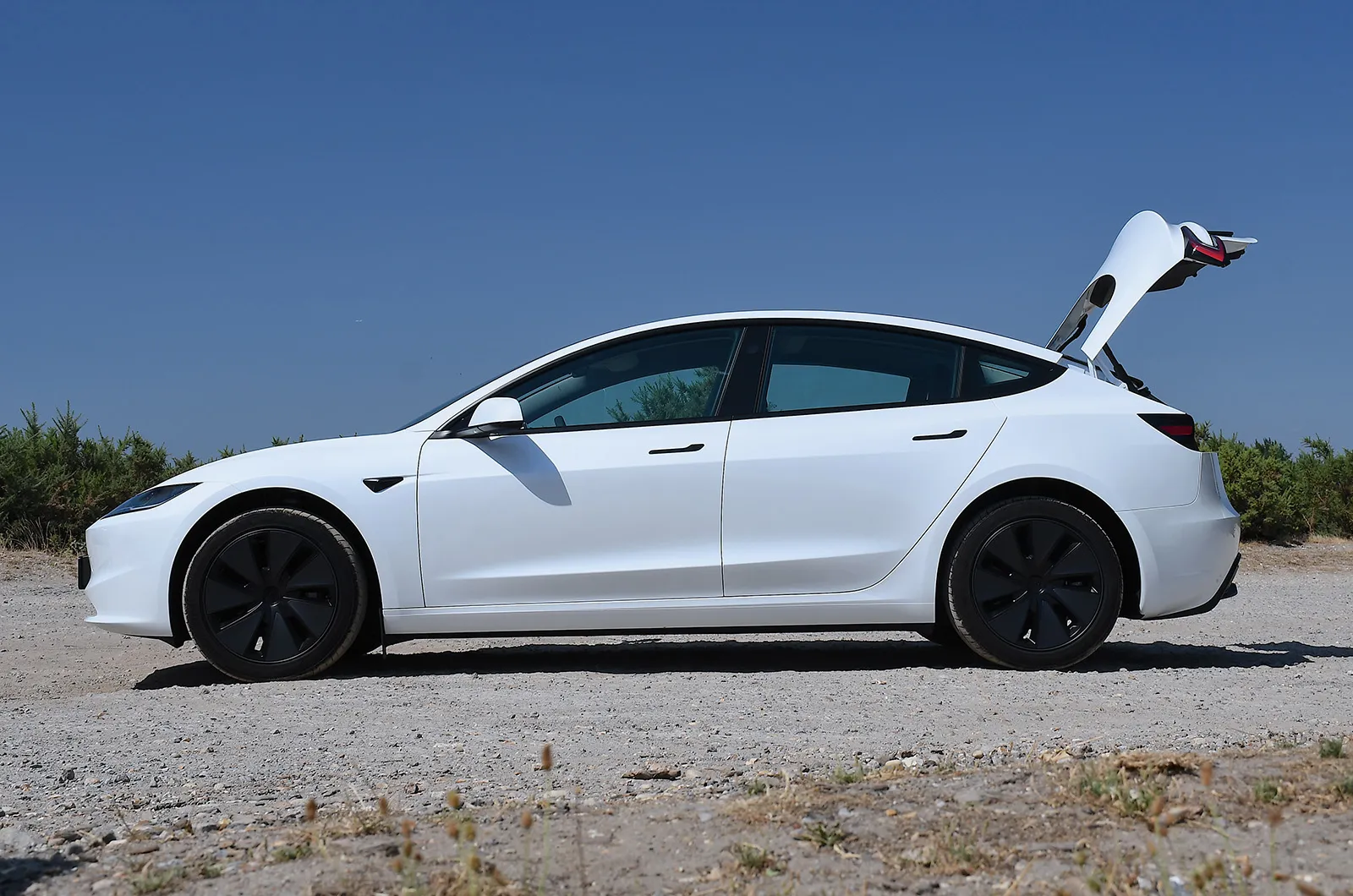
Mazda 6e Takumi Plus with Crystal White Pearl paint
Tesla Model 3 Rear-Wheel Drive with Pearl White Multi-Coat paint (£1300)
Read more: Best and worst electric cars >>
New car group tests
News and advice
News
New Fiat Topolino Dolcevita adds open-top thrills to urban quadricycle
Best of
Best seven-seat SUVs 2026 tried & tested – plus the one to avoid
News
Deal of the Day: Lease a Volkswagen T-Cross from £176 per month
Best of
The 10 slowest-depreciating cars in 2026
Sponsored
What Car? Reliability Survey: Most and least reliable small cars
Feature