Slideshow
Buying a used electric car: everything you need to know
As the number of EVs sold increases, there’s an ever-increasing supply of affordable electric cars on the used market. Here’s what you need to know before buying one

Jack Mortimer
Updated: 13 June 2025
Buying a used electric car: everything you need to know
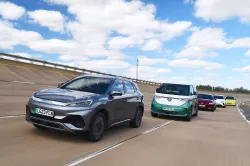
As the UK prepares to end the sale of new petrol and diesel cars in 2030, interest in the growing number of electric models has increased significantly. While a growing number of companies, including BYD, Dacia and Leapmotor, are introducing new electric cars you can buy for less than £20,000, most EVs are still more expensive than their petrol counterparts.
Fortunately, the explosion in sales of new examples means there are now many more electric cars in the classifieds and on used car forecourts. And, of course, buying secondhand means you can dip your toes in the future without necessarily spending a fortune.
But if you are buying a used electric car, what should you watch out for? Here, we outline some of the things you should consider before making a purchase and how to avoid spending a fortune on a troublesome model.
You can find comprehensive guides to buying used cars and electric car ownership through My What Car?, as well as a range of other services to help improve your motoring life.
advertisement
scroll for more
How popular are electric cars in the UK?

According to official figures from the Society of Motor Manufacturers and Traders (SMMT), nearly 312,000 EVs were sold in the UK last year (up 21% since 2023), with them accounting for 20% of the market. It’s estimated that there are around 1.4 million electric vehicles on our roads – a figure predicted to grow to 6.5 million by 2030, the year in which the government plans to ban the sale of new petrol, diesel and full hybrid cars.
It’s no surprise, then, that used EV sales grew 57% in 2024, with 188,000 sold. According to figures from Auto Trader, the Tesla Model 3 was the fastest selling used EV in 2024, with the average example taking just 19 days to sell.
Will it fit into my lifestyle?
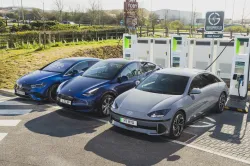
This is the number one question you need to ask yourself before deciding whether to buy a used electric car. You’ll need to consider what you’re going to use your car for, and, with the UK's public charging infrastructure still struggling to keep pace with the number of EVs on the road, how easily you’ll be able to charge it up.
Basically, if your mileage is moderate and you have easy access to daily charging, an electric car could well be for you. A typical used electric car can travel somewhere between 100 and 250 miles on a full charge, with some premium models, like the Audi A6 e-tron and Mercedes EQS able to officially cover up to 400 miles.
What are the charging options?
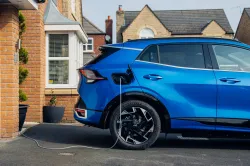
The ideal setup is to be able to charge your car at home. You can plug your car into a domestic three-pin plug socket, but it will take a long time to charge completely.
Better would be to invest in a 7.4kW home wallbox charger, which should enable you to add around 50 miles of range in about two hours, meaning that a typical electric car would take around eight hours to charge from empty to full.
What’s more, many energy companies now offer electric vehicle tariffs which feature cheaper electricity overnight, when you’re most likely to be charging your car. At the time of writing, these tariffs can feature an off-peak rate at just 7p per kilowatt hour (kWh).
What if I can't charge at home?
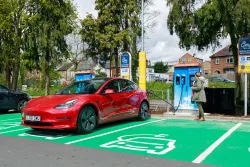
The other option is using public charging points. You might need to sign up to a number of different apps, depending on which companies operate the chargers that you plan to use. There are also a plethora of apps that will help you locate one near you whether you’re at home or travelling around.
Most electric cars are compatible with the rapid 50kW chargers, which can add around 100 miles in just 35 minutes. There are currently around 75,000 public electric vehicle charging devices in the UK.
Quicker still are the growing number of ultra-rapid chargers, which are capable of offering more than 100kW. These can replenish a battery’s charge from 10 to 80% in as little as 20 minutes; however, not all EVs are compatible with ultra-rapid chargers and there are currently very few on the UK roads. According to the EV charger locating service Zap-Map, there were 16,259 rapid and ultra-rapid chargers in use at 6,203 locations across the UK as of May 2025.
What are the differences between driving an electric car and a petrol or diesel?
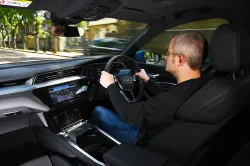
An electric car doesn’t have a gearbox with multiple ratios, but its 'Drive,' 'Neutral' and 'Reverse' pattern mimics a conventional car with an automatic gearbox, so anyone familiar with one of those will find driving an EV relatively easy. However, some electric cars have more linear and swifter acceleration than their petrol and diesel counterparts, so inexperienced drivers could get into dangerous situations if they’re not used to having so much power on tap.
Then there’s the matter of regenerative braking and ‘one-pedal’ driving. Most EVs harvest energy as they slow down, feeding it back into their batteries to help eke out their range. The side effect of this is that they decelerate quite rapidly when you lift your foot off the accelerator.
Fortunately, many electric cars give you the option to choose how much regenerative braking it applies when you ease off the accelerator, with some featuring a ‘one-pedal’ mode which allows the car to come to a complete halt without you needing to use the conventional brakes at all. This can also take some getting used to.
Where can I buy a used electric car?

In a nutshell, these days in pretty much all the places you’d expect to buy a conventional petrol or diesel-engined car. You can buy from a franchised or an independent dealer or trader, privately, or via a number of internet car-buying sites, some of which will even deliver the car to you.
You can pay for it in the same way as you would any other car, too; you'll find cash, finance, HP and even PCP and leasing options offered by many dealers. There are also many favourable salary sacrifice schemes, which let you lease a car through your workplace and pay for it directly from your gross salary. The main advantage of this is that it lowers your taxable income.
What should I look out for with a used electric car?
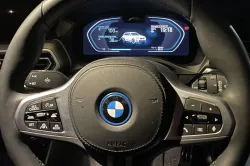
An EV doesn’t have an engine for you to worry about, but it does come with some crucial must-check points of its own. The most important is the issue of battery degradation. Just like the battery in a smartphone, over time the battery in an EV will lose some of its capacity to charge, and its potential range will be reduced.
You can check this by looking at the car’s range, as displayed on the digital dashboard readout, when fully charged, and comparing it with the official figures for the car. Note, though, that these readings aren’t always completely accurate, and that the figures can be affected by the weather as well as other factors – including how the car has been driven prior to your taking the reading.
As well as this, it’s worth bearing in mind that not all cars will indicate their maximum official range on a full charge even when new. On the whole, battery degradation will affect the range of the car more than it will the performance.
How much are batteries likely to degrade?
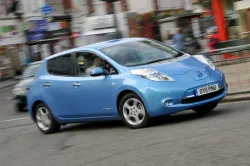
While most manufacturers offer an eight-year warranty on the batteries fitted to their electric models, which generally guarantees it for 70% of its capacity, reports so far indicate that they can be used for notably longer without significant wear.
Most studies predict that electric cars can be used for 10 to 20 years, or 100,000 to 200,000 miles, before being due a replacement battery. That said, the longevity of an EV battery is highly dependent on the conditions it faces. Extreme temperatures, harsh driving, and frequent use of rapid chargers can all result in an electric car battery losing its capacity at a faster than the average rate.
Some older used EVs, such as early examples of the Nissan Leaf and Renault Zoe, might also incur a monthly charge to lease the battery. If you're buying either of these models, it's worth investigating whether this applies to the car you're considering. Battery leasing can keep the purchase cost down, but it's wise to check whether the price of your used Zoe or Leaf includes it.
What else do I need to look out for?

As with a conventionally powered car, you’ll need to check the V5C registration document and the service history of the car thoroughly. Pay attention to such details as the number of owners and the accuracy of the displayed mileage.
Next, check the general condition of the bodywork, the brakes, wheels, tyres and the 12-volt battery, as well as the quality of the interior and its fittings, and make sure that all the electrical equipment inside is working as it should. Check the car comes with the correct number of keys. Look closely for dents and scrapes in the bodywork; also check panel fit. If the panels don’t line up properly, the car might have been in a collision and then poorly repaired.
In addition, your used electric car should come with all the leads and cables that it was specified with from new. Check that these are present and working properly and take a look at the car’s charging socket to make sure it is clean and in working order.
Should I take a test drive?

Our advice would be to never buy any car – new or used – without taking it for a test drive first. Make sure you’re insured beforehand, either on your own insurance or by taking out one-day cover. Electric cars are, by their nature, generally quieter than petrols and diesels, so listen out for any unusual noises from the suspension or rattles from the car’s interior fittings. Check everything works as it should, including the electric windows seats, and the infotainment system.
If you're still interested in buying the car after your drive, invest in a car data check to confirm whether it is subject to any outstanding finance. A car data check will also tell you if the registration is the original one and whether or not the car has ever been involved in a major accident. There are several providers, including HPI, the AA, and the RAC.
How can I extend my electric car’s battery life?
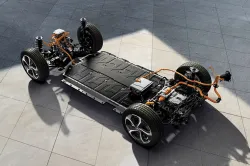
As with your smartphone, fully charging or entirely depleting your EV’s battery can degrade it more quickly. Keeping the charge level between around 20% and 80% is recommended as a way of helping your battery to last longer. It’s why most manufacturers quote charging times to 80%, rather than to full.
It’s worth noting, too, that the frequent use of rapid chargers can also have a detrimental effect on the life of EV batteries. If you’re charging at home, via a charger or a domestic socket, charge overnight when the temperature is lower. Another tip is to use the car as soon as you can after it has finished charging.
If your EV is going to sit around without being driven, or will only be used locally, don’t fully charge it first. Keep the battery around half full, because this is better for its long-term health.
How can I change my driving to extend my electric car’s battery life?

Aggressive acceleration and hard use also speed up battery wear. It will also reduce the range between charges, so it’s much better to take things slow and steady. Avoid extreme temperatures if possible, too, because these can reduce the car’s range and battery performance.
Are electric cars less reliable?
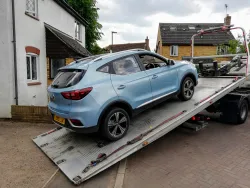
Data from our annual What Car? Reliability Survey has allowed us to compare electric cars with their conventionally powered counterparts. In our latest study, the typical electric car gained a score of 87.7% – about 4% below average. In comparisons between rivals of similar price and proficiency, petrol models come out on top in the majority of instances.
Nevertheless, with the exception of the MG4 and ZS, some owners of which encountered problems with non-engine related electronics and the bodywork, and the electric versions of the Vauxhall Corsa and Mokka, which both suffered battery and infotainment system faults, the EVs assessed still proved very dependable, suggesting that there isn’t a significantly increased risk by going electric.
Do electric vehicles have any problems with MOT tests?
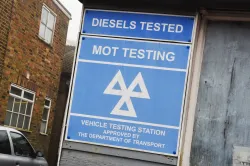
Any car that's more than three years old must have an annual MOT test, which checks a car’s roadworthiness. The MOT for an electric car typically takes less time than a petrol, diesel or hybrid equivalent as the inspector doesn’t need to test the emissions and there are fewer mechanical components to inspect.
Nevertheless, there are still things that can go wrong, particularly if the seller has not properly cared for their car. As a result, it’s important that you check your potential purchase’s details at www.gov.uk/check-mot-history. MOT history sites let you instantly see the results of previous inspections, including any advisories, along with records of the mileage at each MOT, which can help to prevent cases of clocking.
Is servicing an electric car a problem?
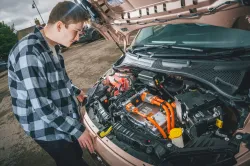
The good news here is electric cars have fewer mechanical parts to maintain than petrol and diesel models, so they should cost less to keep in perfect running order. On average, an EV motor has around 20 components, compared with the thousands of moving parts that are found in conventional engines. That means there’s no oil to change, filters to replace or cambelts to renew. However, although there may be fewer moving parts, you’ll still have to regularly check and change fluids and brake pads and discs, so regular servicing is vital.
It’s worth doing your homework before you buy a used EV and finding out if there’s a suitably qualified dealer near you who can service and maintain the car, just as you would do with a used petrol or diesel car.
It’s also worth noting that electric vehicles come with a potentially dangerous high-voltage electrical system, and it requires suitably qualified automotive technicians to work on them. It is certainly not recommended that owners tinker with their cars themselves for this reason. The boom in sales of EVs, combined with a general shortage of automotive technicians of all sorts, has led to an urgent call to train up more.
For all the latest reviews, advice and new car deals, sign up to the What Car? newsletter here
NEXT: The top 10 best used electric cars >>
Electric car news and features
Used
Buying a used car
advertisement
scroll for more
News and advice
News
Dacia Sandero and Sandero Stepway gain new full hybrid power
News
New Fiat Topolino Dolcevita adds open-top thrills to urban quadricycle
Best of
Best seven-seat SUVs 2026 tried & tested – plus the one to avoid
News
Deal of the Day: Lease a Volkswagen T-Cross from £176 per month
Best of
The 10 slowest-depreciating cars in 2026
Sponsored