Slideshow
Best family SUVs 2025: our favourite SUVs for kids and cargo
Want practicality, class and an elevated driving position in a relatively compact and affordable package? These are the top 10 cars you should be looking at – and the ones that are best avoided

Stuart Milne
Updated: 14 September 2025
Best family SUVs 2025: our favourite SUVs for kids and cargo
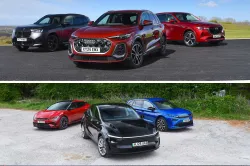
If any class of car were to be likened to the Swiss Army Knife, then surely it must be the family SUV. These are some of the most versatile cars around – and they need to be. After all, they'll be asked to do everything from the school run to long motorway trips, and be asked to transport both kids and cargo without missing a beat. In short, to be the best family SUV, you need to do just about everything well.
Since this is a very popular class of car, it won't surprise you to learn that just about everyone makes a family SUV these days. Our list covers cars which are available with traditional petrol and diesel power, as well as hybrid and plug-in hybrid power options and even a growing number of electric SUVs.
Choosing the best family SUVs requires rigorous testing, then, but it's a task that our experienced team of road testers are more than up to. They've driven every family SUV on the market over thousands of miles, spending hundreds of hours behind the wheel both on public roads, and testing models back-to-back against their key rivals at our private test track. We've also filled them to the brim with people and luggage to see how they handle when fully laden.
The result of all that testing is the feature you see here, where we're naming the very best family SUVs, as well as the one we'd avoid. Remember that if any car here takes your fancy, you can learn more about it by following the links through to our in-depth reviews, or see the latest deals available through our New Car Deals service.
Slideshow story: please click the right-hand arrow above to continue, or simply scroll down if you’re reading on your mobile
advertisement
scroll for more
10: MG S5 EV
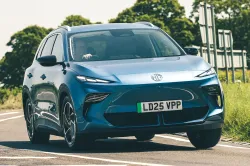
This replacement for the MG ZS EV is more capable and desirable than that car in just about every way.
Not only does it receive newer underpinnings, borrowed from the impressive MG4, but it can also go further than the old ZS. Indeed, the Standard Range SE can officially take you 211 miles between charges – further than a Smart #1 Pro – while the Long Range model ups that figure to 298 miles, which puts it into the same league as the Skoda Enyaq.
MG has clearly spent a lot of time upgrading the S5's interior, to the point where it now compares favourably with electric SUV rivals including the Jeep Avenger Electric, while the Kia EV3 and Skoda Elroq feel like a step up again. The S5 is also noticably roomier than many other electric SUVs, though both the EV3 and Elroq are more comfortable due to their more supportive seats.
"I managed to squeeze seven carry-on suitcases into the boot of the MG S5 EV, which is just one less than a Skoda Elroq. If you want a powered tailgate, it's worth looking at Trophy trim since it comes as standard there." – Claire Evans, Consumer Editor
10: MG S5 EV
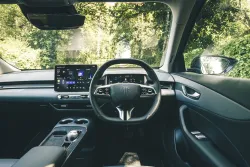
Strengths
- Eager performance from Long Range version
- Standard Range SE gets you lots of space for the money
- User-friendly controls
Weaknesses
- Choppy high-speed ride
- Range-topper's price edges close to better rivals
- MG has a poor reliability record
9: Mercedes GLC
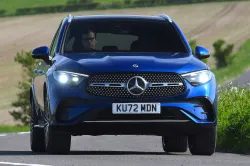
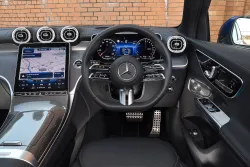
The Mercedes GLC is a strong performer in the family SUV class but it’s the plug-in hybrid version, badged 300e, which is particularly impressive, especially for those with short commutes to school or work, or for company car drivers.
That’s because it combines low company car tax bills with the promise of being able to travel around 80 miles on electric power alone – that’s further than pretty much any other plug-in hybrid on the market.
Away from the pragmatic, the GLC has a spacious and eye-catching interior with loads of on-board tech that's a big step up from the tough-but-dull look of some family-focused models. Our favourite AMG Line Premium car even includes special glass that insulates you from heat and noise – a welcome feature if you have a young family and do lots of long journeys.
We were able to fit six carry-on suitcases into the PHEV 300e, which has a slightly smaller boot than regular petrol-powered models. But there’s more outright space than you’ll find in the Audi Q5 or BMW X3.
"The GLC trades some agility for impressive stability, and I like that its suspension is softer than rivals such as the Lexus NX to deliver a comfy ride. It's quiet at motorway cruising speeds, too." – George Hill, Used Cars Writer
9: Mercedes GLC
Strengths
- Well equipped
- Plug-in hybrid has impressive electric range
- Spacious interior
Weaknesses
- Slightly firmer ride than rivals
- Stylish interior doesn't feel the most sturdy
- Petrol engines need working hard
8: BMW X3
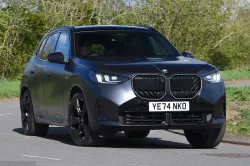
The latest BMW X3 is the driver's choice among the cars here, offering punchy performance and agile handling no matter which version you go for. It's the xDrive20 mild-hybrid petrol which we'd steer you towards, though. With 205bhp, it's not short on grunt, and can hit 60mph in about the same time as a Lexus NX350h, which is a full hybrid.
Then there's the way the X3 tackles corners, offering the kind of tight body control which you don't always find in cars of this size. And yes, the X3 is a sizeable car, with room for a couple of tall adults to lounge in its rear seats, and enough room for eight carry-on suitcases in its boot – that's the same amount you can fit inside a Land Rover Discovery Sport.
Elsewhere, the X3 sets the standard for infotainment, thanks to the swish graphics of its iDrive system, and the fact that you can control it with a rotary dial, as well as using your fingers or voice.
"Just because we recommend petrol power in the X3, don't think you'll need to spend a lot of time at the pumps. I managed to get 37.9mpg without trying too hard, helped by the car's mild-hybrid assistance." – Lawrence Cheung, New Cars Editor
8: BMW X3

Strengths
- Blends decent performance with agile handling
- Generous rear-seat space
- Big boot
Weaknesses
- You’ll want to add some options
- Interior is less user-friendly than before
- Not the longest PHEV range in its class
7: Porsche Macan Electric
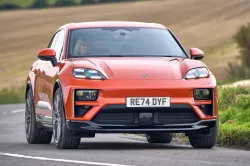
Want to mix your practical family SUV with a sprinkling of sports car fun? The Porsche Macan Electric is a great place to start.
Our recommended version might be the entry-level choice, but it can still rocket you to motorway speeds in a deceptively quick time, thanks to its 356bhp motor which drives the rear wheels. Incidentally, if you want four-wheel drive, then the Macan 4, 4S and Turbo all have a second motor.
'Genuinely astounding' is how we described this electric Macan as it weaved along a country road, because its body movements are remarkably well controlled for such a heavy car. Its handling is both agile and engaging, too, so you're likely to complete your countryside B-road blast grinning like a Cheshire cat.
Your family will likely be smiling, too, because they'll have a decent amount of space to stretch out in. The rival Kia EV6 GT is roomier still, but a couple of six-footers will be perfectly fine. Just be warned that, unlike some electric SUV rivals, the Macan Electric's rear seats don't recline or slide.
"I love in-car tech, so I was delighted to have a play around with the Macan Electric's three-screen infotainment setup. As well as a digital driver's display and infotainment screen, you can get a third 10.9in screen for the front passenger to use." – Stuart Milne, Digital Editor
7: Porsche Macan Electric

Strengths
- Rapid in a straight line and entertaining in the bends
- Wonderful interior quality
- Excellent electric range
Weaknesses
- More expensive than its petrol counterpart
- You’ll want to add some (pricey) options
- Porsche reliability is a concern
6: Audi Q5
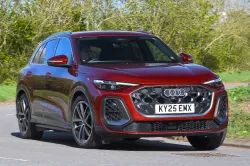
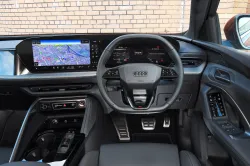
The Audi Q5 is a stalwart of the family SUV class because it blends sportiness and usability with the upmarket look and feel many buyers seek. While there’s no electric version – you’ll need the slightly smaller Q4 e-tron for that – there is a comprehensive range comprising petrol, diesel and plug-in hybrid models. That’s in addition to the high-performance SQ5 and Q5 Sportback coupé SUV, which we’ve covered separately.
The best choice for company car drivers is the plug-in hybrid model, but for all round ability (whisper it quietly), the diesel, badged TDI quattro 204, is our top pick. It feels strong and smooth, and makes for an excellent tow car, too. Ride quality is good, but depends on the trim you choose.
S Line trim is our favourite because it has superb and supportive seats, sliding rear seats and tinted rear windows – plus the sporty look that’s so popular with premium SUVs.
Space in the rear is a step behind the Mazda CX-60, but there’s a decent amount of storage. The boot is great; we were able to squeeze nine carry-on suitcases inside, although plug-in hybrids’ boots are smaller.
"I found the Q5 to look a little austere inside, but there's no faulting its build quality and the solid yet tactile materials. These are first-rate." – Lawrence Cheung, New Cars Editor
6: Audi Q5
Strengths
- Punchy engines
- Confidence-inspiring handling
- Comfy ride on optional air suspension
Weaknesses
- Interior quality is nothing special
- Fiddly touchscreen controls for the air-con
- Some rivals offer even more rear leg room
5: Tesla Model Y
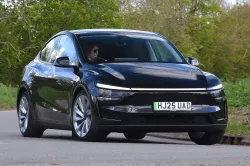
It won't surprise you to learn that since the Tesla Model Y is, in effect, a jacked-up version of the big-selling Tesla Model 3, it keeps many of the same virtues as that car.
Chief among those is how far it can go between charges. Even entry-level RWD models can officially take you up to 311 miles, while the Long Range model ups that figure to 387 miles – which be more than enough for the weekly needs of most families. They're quick, too, with the RWD model dispatching the 0-60mph sprint in less time than the cheapest Kia EV6 could manage.
While the BYD Sealion 7 or VW ID Buzz offer more space for rear-seat passengers, a couple of six-footers won't field any complaints from the rear bench of the Model Y. They won't need to pack light, either, because the Model Y has a large boot by class standards. Indeed, we managed to split nine carry-on suitcases between the regular boot and the small 'frunk' under the bonnet.
"I like the Model Y both for the way it looks and the way it drives, but I especially like it because, as with all Teslas, it gives you preferential access to the brand's ultra-fast and ultra-reliable Supercharger network." – Dan Jones, Reviewer
5: Tesla Model Y

Strengths
- Rapid acceleration
- Long range between charges
- Tesla’s charging infrastructure
Weaknesses
- Some fiddly interior controls
- Ride comfort could be better
- No Apple CarPlay or Android Auto
4: Volvo XC40
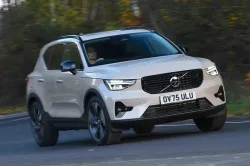
In many ways, the Volvo XC40 is the purest essence of a great family SUV. This former What Car? Car of the Year blends the practicality, style and – of course – safety credentials for which Volvo is famed the world over. Just here, it’s scaled down into more compact dimensions that make it great for more congested environments.
Our favourite engine is the entry-level B3 2.0-litre petrol, because it has enough power for most buyers and keeps costs down. The driving experience is relaxed and comfortable, with an outstanding ride and a smooth automatic gearbox – you can no longer buy a manual XC40. It’s not as much fun to drive as the BMW X1, but it’s certainly quieter on the road. Plus, it has mild hybrid technology to help lower your fuel bills.
The XC40 comes well equipped as standard, although we recommend upgrading to Plus trim, which adds heated front and rear seats, a heated steering wheel and ambient interior lighting. As you might expect, the XC40 scored a full five-star rating in the Euro NCAP crash tests, coming with a comprehensive suite of safety features including an automatic emergency braking (AEB) system which can detect cars, cyclists, pedestrians and even animals. Low depreciation means good PCP deals are available.
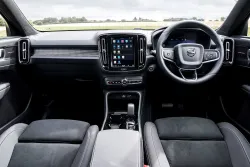
"The XC40’s portrait-orientated 9.0in touchscreen looks and operates a little like a tablet, with menus that slide and swipe. I like the 12-speaker Harman Kardon sound system, too, but that's only available in high-spec Ultimate models." – Darren Moss, Deputy Editor
4: Volvo XC40
Strengths
- Stylish and high-quality interior
- Comfortable ride on most versions
- Comprehensive safety kit
Weaknesses
- Lacks the rear-seat flexibility of some rivals
- Fairly small infotainment screen
- Some road noise on the motorway
3: Renault Scenic
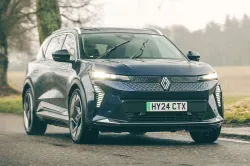
The second electric SUV to feature on this is the Renault Scenic, which officially offers up to 379 miles of range between charges in our recommended Long Range form. In our real-world range tests, the Scenic's efficiency figure of 3.1 miles/ kWh means a range of 270 miles should be acheivable under normal conditions, and that's likely enough for the needs of most drivers.
The Scenic's suspension has been tuned for comfort rather than agility, with the result being that it edges even the Kia EV6 for outright comfort, and is more supple than the Tesla Model Y. The Scenic's steering is accurate, too, and although we'd like it to have a bit more heft, you can adjust its resistance by placing the Scenic into its Sport driving mode.
Even Long Range versions of the Scenic undercut most rivals on price, and there's no need to look beyond entry-level Techno trim, because this comes with everything you're likely to want including 19in alloy wheels, dual-zone climate control and adaptive cruise control.
"Although there's decent space in the back of the Scenic, I was disappointed to find that I couldn't slide the rear bench backwards and forwards to prioritise either leg room or boot space like you can in the rival Hyundai Ioniq 5." – Stuart Milne, Digital Editor
3: Renault Scenic

Strengths
- Long range between charges
- Cheaper than many rivals
- Five-star Euro NCAP safety rating
Weaknesses
- Rear-seat versatility could be better
- Spongy brake-pedal feel
- Not particularly quick
2: Skoda Elroq
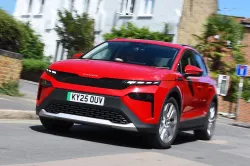
If you're in the market for an electric family SUV, then we think the Skoda Elroq is the best car of its kind. And that shouldn't come as a surprise, because it's roughly the same size and shape as the combustion-engined Skoda Karoq – a firm What Car? favourite. Indeed, we managed to fit six carry-on suitcases inside its boot, which is more than the Kia EV3 can manage. And although the Renault Scenic can hold more still, the Elroq is better to drive than that car.
Speaking of driving, it's the range-topping 85 model which we think will suit most buyers best. That's because you get a punchy 282bhp to play with, which results in a nippy 0-62mph sprint time of 6.2sec, plus the largest 77kWh battery, which gives you an official range of up to 360 miles between charges.
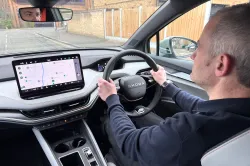
You'll be comfortable inside the Elroq. Its seats offer more side support than the Tesla Model Y, and a couple of six-footers will be comfortable on the rear bench, even if they're sitting behind an equally tall driver. Edition trim won't leave you wanting for kit, with adaptive cruise control, keyless entry and wireless phone charging counting among its key features.
"I didn't expect the Elroq to drive as well as it does – it handles more nimbly than a Kia EV3 or Renault Scenic, with light steering and a tight turning circle." – Dan Jones, Reviewer
2: Skoda Elroq
Strengths
- Comfortable yet sharp to drive
- Very roomy in the back
- Well priced and equipped
Weaknesses
- Rear seats don't do anything clever
- No physical climate controls
- Heat pump costs extra
1: Kia Sportage
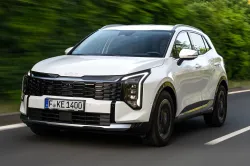
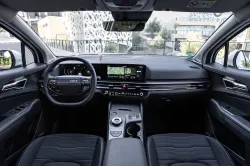
Some people might think they’re getting a superior car if they go for a premium-badged model rather than something more down to earth, but when a car is as well rounded as the Sportage, it’s really difficult to justify the extra outlay.
As well as being good to drive and slightly comfier and more refined than the closely related Hyundai Tucson, the Sportage has a smart-looking and user-friendly interior, with loads of space for rear passengers and a large, practical boot. Although the rear seats don’t slide like they do in some rivals, the seatbacks recline for extra comfort and have a useful 40/20/40 split.
While fuel-sipping hybrid and plug-in hybrid versions are available, we’d stick with the cheaper mild hybrid petrol engine, which combines lively performance with reasonable running costs. There's no need to look beyond the entry-level Pure trim either, since this comes with everything you're likely to want including 17in alloy wheels, cruise control and dual-zone climate controls.
"An intelligently designed centre console means the Sportage has plenty of storage space, and I like the generously sized bin under the centre armrest." – Will Nightingale, Reviews Editor
1: Kia Sportage
Strengths
- Lower-spec models are great value
- Smart interior
- Generous rear leg room and boot space
Weaknesses
- Rear head room compromised with panoramic roof
- No clever rear seat functions
And the family SUV to avoid - Lexus UX
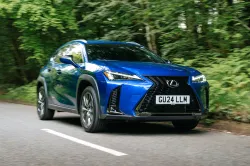
It's pleasant inside and its hybrid power makes it an efficient choice, but space in the UX is limited and it's only so-so to drive.
advertisement
scroll for more
News and advice
Feature
BMW iX3 long-term test
News
Dacia Sandero and Sandero Stepway gain new full hybrid power
News
New Fiat Topolino Dolcevita adds open-top thrills to urban quadricycle
Best of
Best seven-seat SUVs 2026 tried & tested – plus the one to avoid
News
Deal of the Day: Lease a Volkswagen T-Cross from £176 per month
Best of